How to Decorate a Home When Visual Clutter Overwhelms You
Disclosure: Some of the links in this post are affiliate links. This means if you click on the link and purchase an item, I will receive an affiliate commission at no extra cost to you.
Maybe your home isn’t actually messy. There are just too many things competing for your attention.
The books on the coffee table. The toys that never seem to make it back into their baskets. The open shelves filled with little decorations. The kitchen appliances sitting on the counter. The different colors, patterns, pictures, baskets, and everyday essentials all visible at once.
And somehow, even when everything is relatively tidy, you still walk into the room and feel… overwhelmed.
You may have found yourself thinking, “My home feels stressful because there is too much to look at. How do I make it feel calm without having to own almost nothing?”
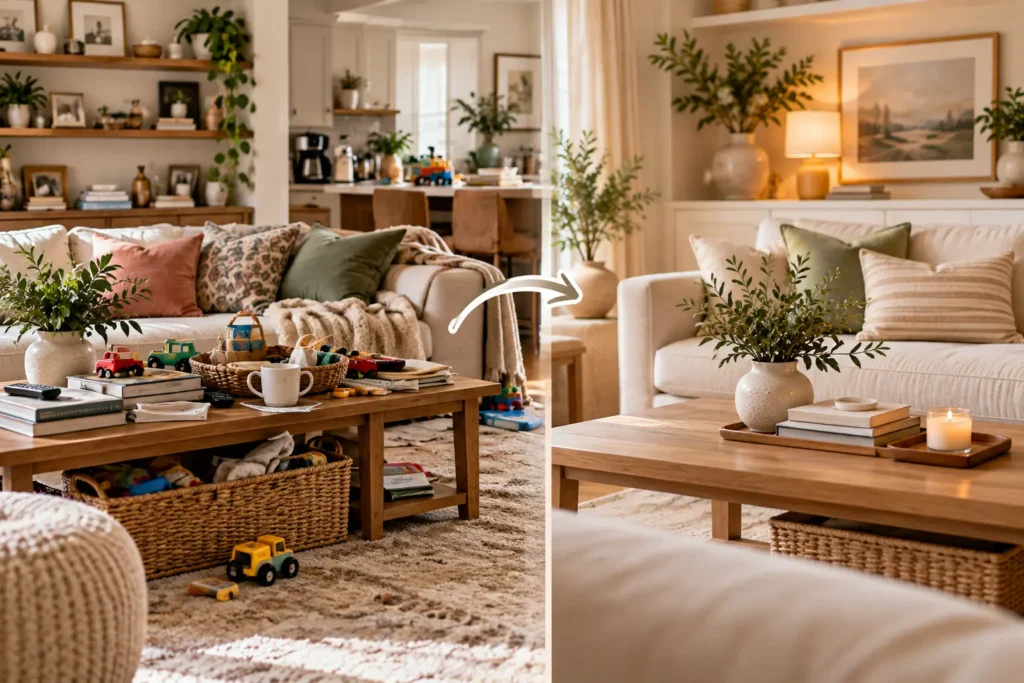
Because here’s the thing: you don’t necessarily want to become a minimalist. You like your books. You like your family photos. You like beautiful things. You want your home to feel warm, personal, and lived-in.
You just don’t want to feel like your eyes have to process everything all at once.
If you’ve ever walked into your own home and immediately felt the urge to put things away, close a cabinet, clear a countertop, or simply escape the visual noise, you may not need to completely redecorate or get rid of half your belongings.
You may simply need to decorate differently.
The goal isn’t to create a perfectly empty, minimalist home. It’s to create a home with enough visual breathing room that your eyes and brain can finally rest.
In this guide, we’ll look at how to make your home feel calmer by reducing visual competition, creating intentional focal points, grouping similar items, choosing quieter combinations of colors and patterns, and giving everyday belongings a place where they don’t have to constantly demand your attention.
The goal isn’t minimalism
You don’t have to get rid of everything you love to make your home feel calmer. The goal is to reduce the number of things competing for your attention, create visual breathing room, and give the things you love enough space to stand out.
How to Make a Visually Busy Room Feel Calmer
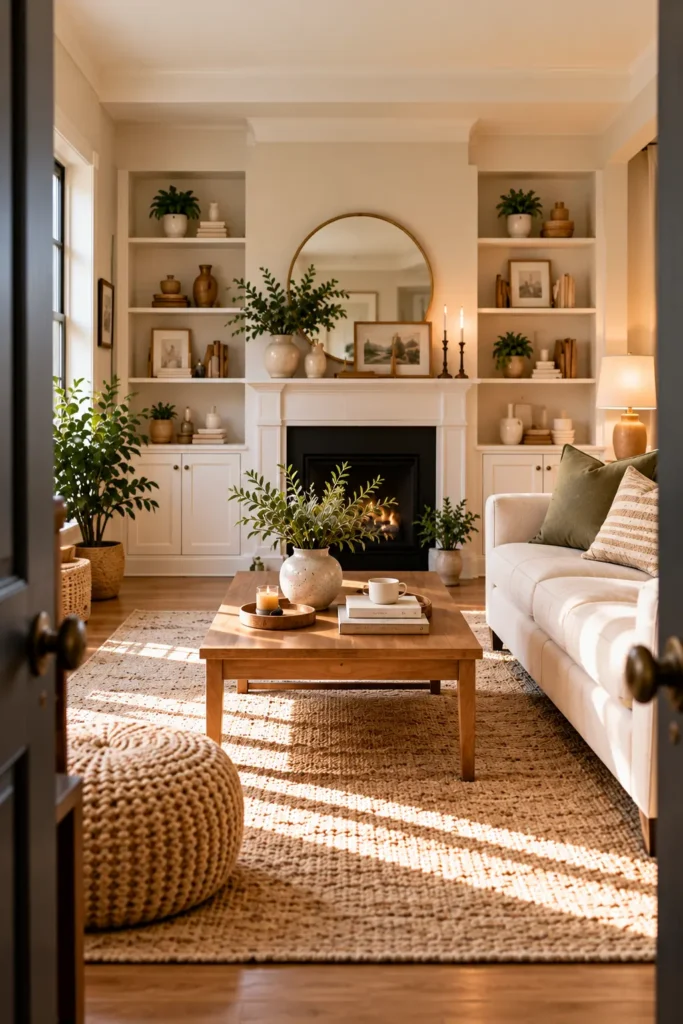
You don’t have to remove everything from a visually busy room to make it feel calmer. The goal is to reduce the number of things your eyes have to process at once.
Start by looking at the room from the doorway. Don’t focus on whether it is clean or dirty. Instead, ask yourself:
What is my eye noticing first, second, and third?
If there are too many competing answers, the room needs more visual breathing room.
1. Remove what is creating visual noise
Start by looking for visual noise culprits.
Look for:
You don’t need to throw these things away. Removing them from the room is enough to start.
A useful rule is: if an item is neither useful nor intentionally decorative, it probably doesn’t need to be visible.
2. Hide the things you use but don’t need to see
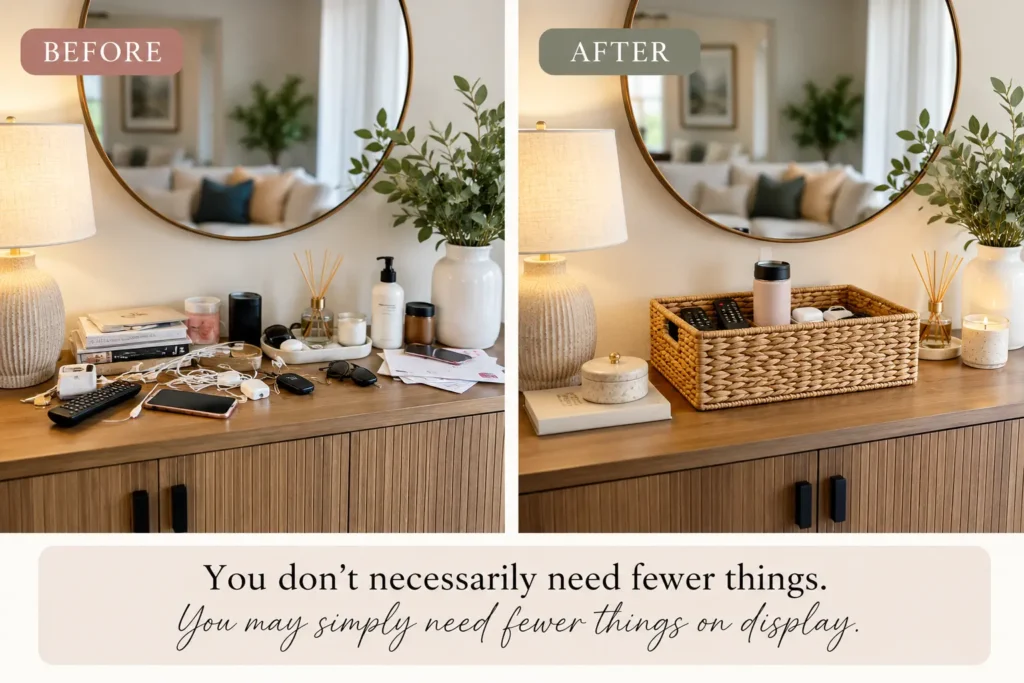
Not everything causing visual clutter is something you can get rid of.
Remote controls, chargers, children’s toys, paperwork, toiletries, appliances, cleaning supplies, and everyday essentials are part of real life.
The solution is to hide the visual evidence of everyday life where possible.
Use:
- Closed cabinets
- Drawers
- Lidded baskets
- Storage ottomans
- Decorative boxes
- Baskets under consoles
- Bedside drawers
- Concealed charging stations
3. Leave the right things visible
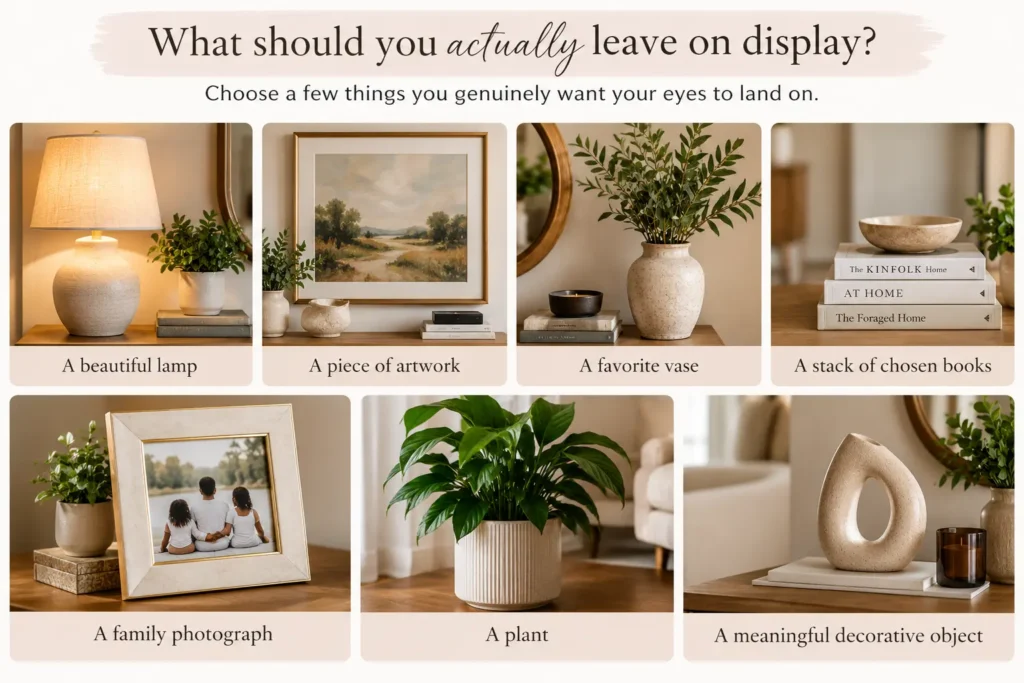
A calm room shouldn’t be completely empty.
Choose a few things that you actually want your eyes to land on.
This might be:
- A beautiful lamp
- One large piece of artwork
- A favorite vase
- A stack of carefully chosen books
- A family photograph
- A plant
- A meaningful decorative object
Instead of placing ten small objects across a shelf, you might display three and give each one enough space to stand out.
Decor works better when everything isn’t trying to be the star.
4. Create visual breathing room
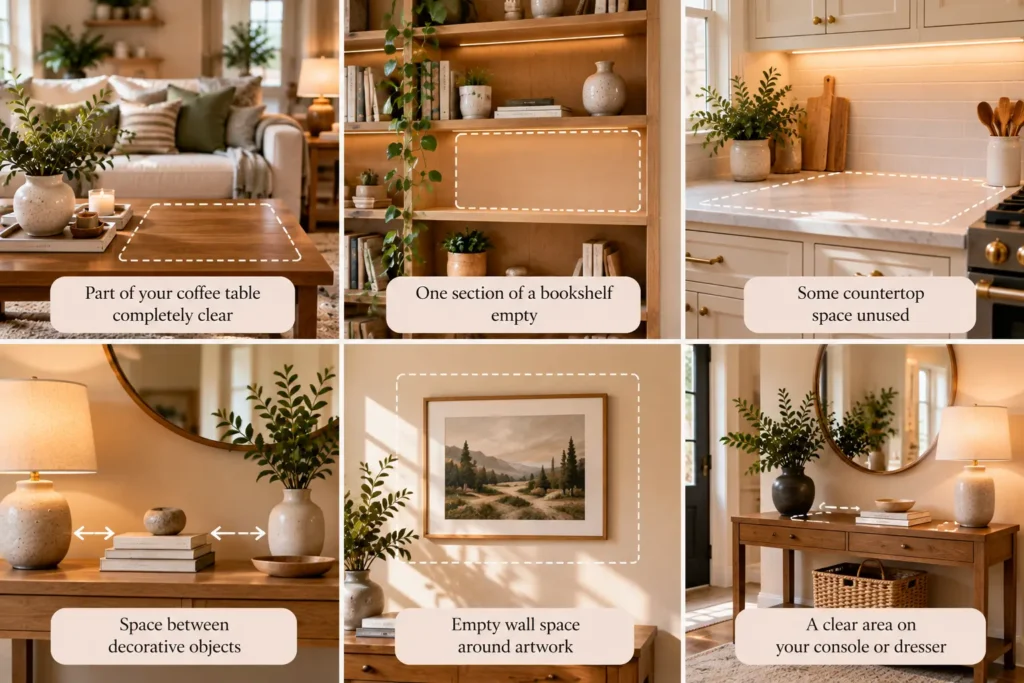
Visual breathing room is simply empty space around the things you want to notice.
If every surface is covered, nothing gets a moment of visual rest.
Try leaving:
- Part of your coffee table completely clear
- One section of a bookshelf empty
- Some countertop space unused
- Space between decorative objects
- Empty wall space around artwork
- A clear area on your console or dresser
You don’t have to fill every available space just because you have something that could go there.
Sometimes the most calming thing you can add to a room is nothing at all.
A simple test
👀The 5-Second Visual Clutter Test
Stand at the doorway and look around the room for five seconds.
Where does your eye go first?
Then ask:
Is there somewhere for your eye to rest?
If your eyes keep jumping from the TV to the shelves, coffee table, toys and walls, the room may have too many competing visual elements.
How to Decorate Without Adding More Visual Stimulation
Once you’ve removed some of the visual clutter, be careful about what you add back.
If visual stimulation is already overwhelming you, adding more decor—even beautiful decor—can bring the same problem right back.
Choose simpler decor
When a room already has a lot going on, look for decor with simple shapes and uncomplicated designs.
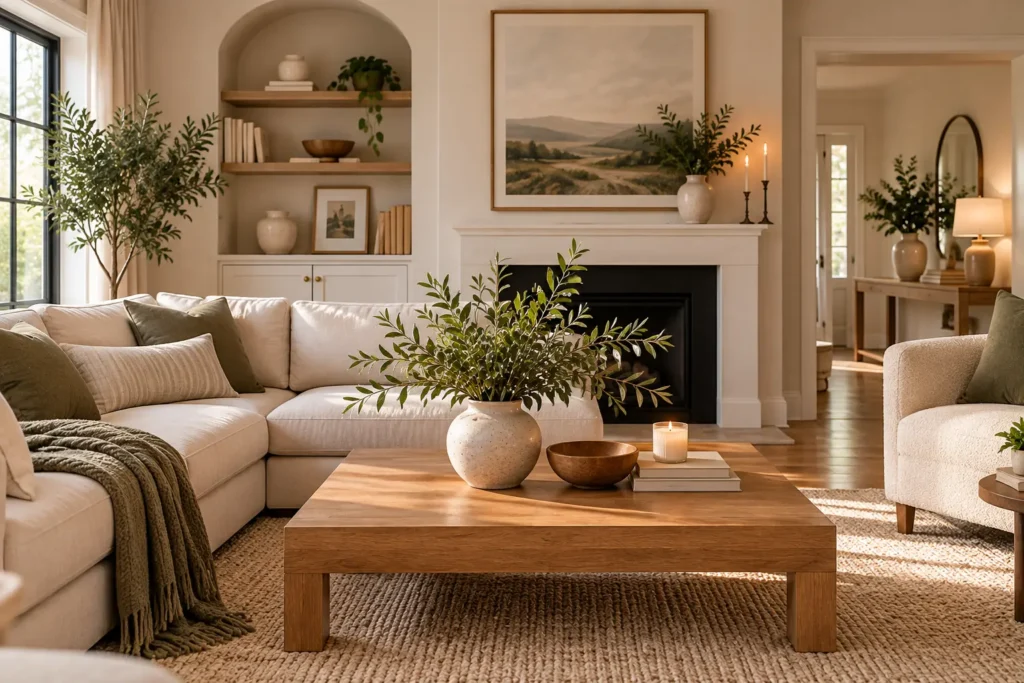
Instead of several highly detailed objects, consider:
- A simple ceramic vase
- A plain table lamp
- A solid-colored throw
- A simple framed print
- A natural wood bowl
- A single large plant
- A textured but uncomplicated rug
A room can have plenty of personality without every object having an elaborate pattern, unusual shape, bright color, or decorative detail.
When your eyes already have a lot to process, quiet decor gives them somewhere to rest.
Limit the number of patterns
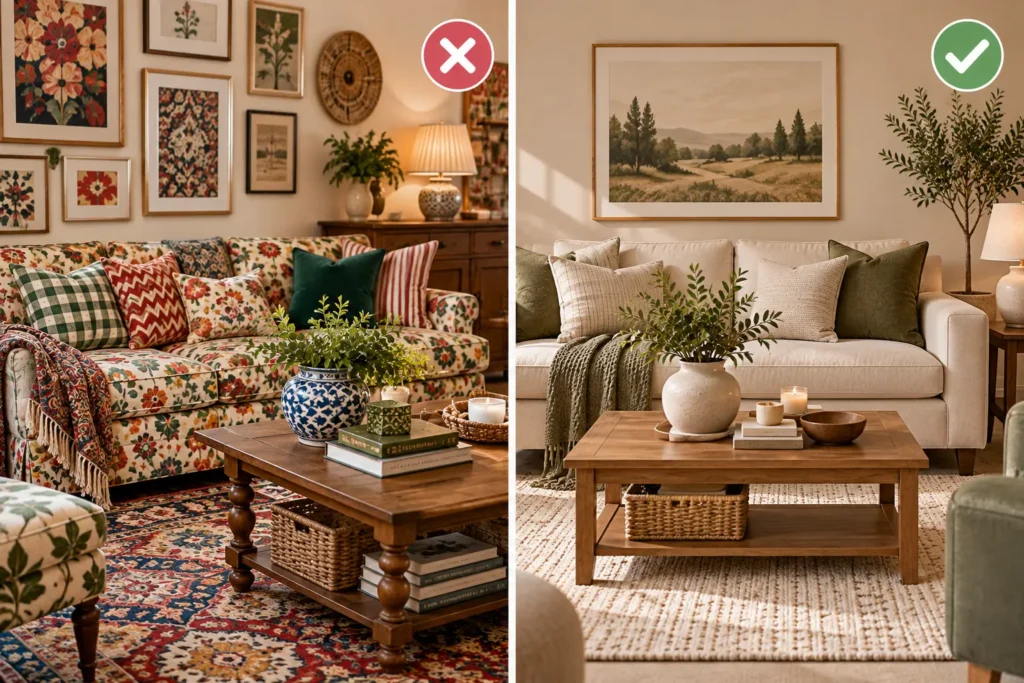
Patterns are one of the quickest ways to make a room feel visually busy.
You don’t necessarily need to eliminate them. Just avoid having several unrelated patterns competing with one another.
For example, if your sofa has a patterned fabric, you might choose solid-colored cushions and a relatively simple rug.
If you have a bold patterned rug, let other elements in the room be quieter.
A simple approach is to choose one main pattern and let the surrounding pieces support it rather than compete with it.
Reduce competing colors
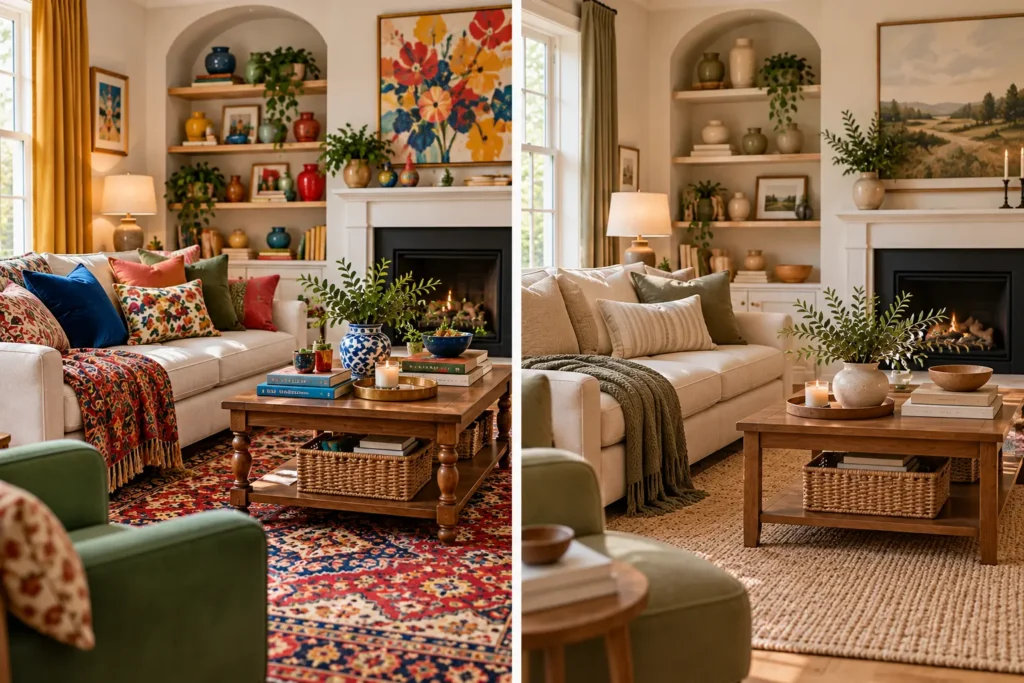
You don’t need an entirely beige or neutral home to create visual calm.
The problem is often not color itself. It’s too many unrelated colors appearing at the same time.
Look around the room and count how many noticeable colors you can see.
If you have blue cushions, a red rug, green curtains, yellow artwork, orange accessories, and several different wood tones all competing for attention, the room can feel busy even when it is perfectly organized.
Try narrowing the room down to:
- A main color
- One or two supporting colors
- A few natural or neutral tones
You can still introduce color through artwork, plants, cushions, books, or accessories. The difference is that the colors now feel connected rather than random.
Avoid filling every surface with small objects
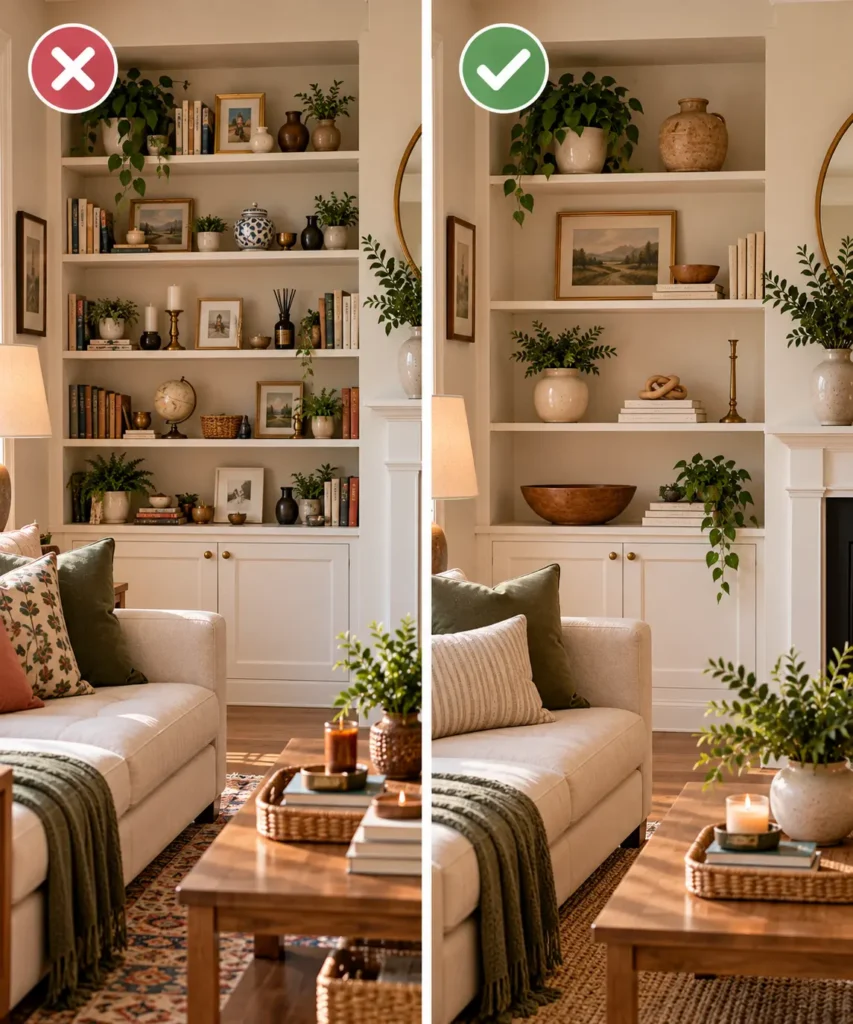
Small decorative objects can quickly create visual noise because your eyes have to register each individual item.
A shelf with twelve tiny decorations may feel much busier than a shelf with three larger pieces.
Instead of scattering lots of small objects around the room, try grouping and editing them.
For example, place a vase beside a small stack of books and one meaningful object rather than displaying seven separate accessories.
You can also replace several tiny decorations with one larger statement piece.
Give your decor room to breathe
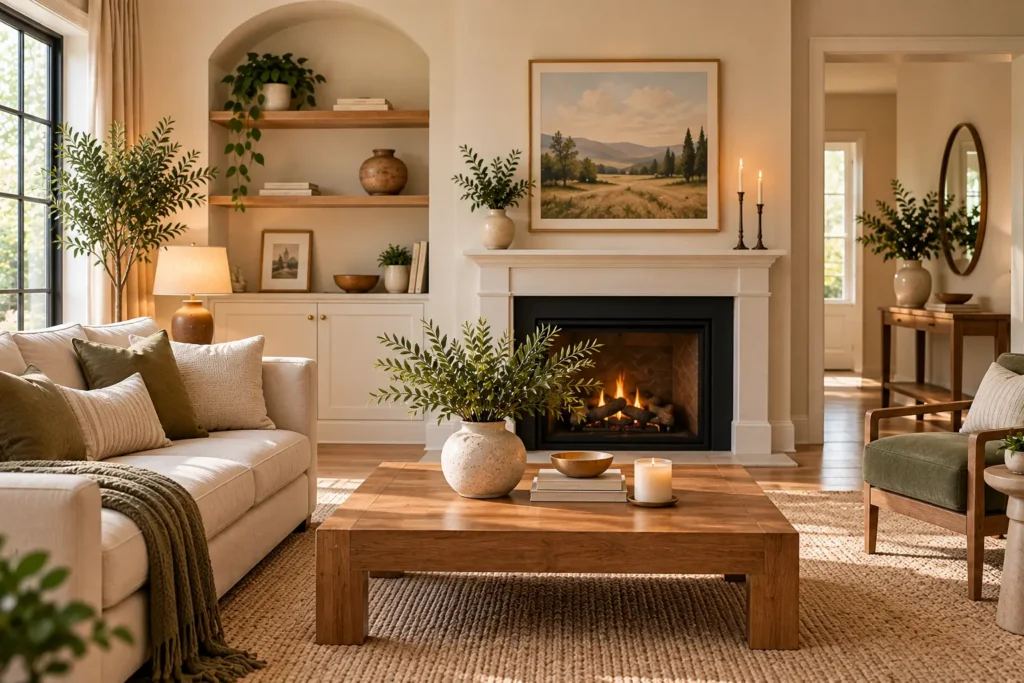
Even beautiful decor can become overwhelming when there is no space between it.
Don’t be afraid to leave part of a shelf empty. Leave some wall space around artwork. Keep a section of your console clear.
That empty space isn’t wasted space.
It’s what allows the things you chose to decorate with to actually be noticed.
When everything is competing for attention, nothing feels special. When you reduce the competition, even a few simple pieces can make a room feel beautifully decorated.
Quick Visual-Stimulation Checklist
Before adding another piece of decor, look around the room and ask:
If you answered yes to several of these, you probably don’t need more decor. You need more visual breathing room.
Before buying or displaying something new, try removing one thing first. If the room feels better without it, you’ve found your answer.
A Practical Way to Decide What Stays Out
One of the hardest parts of creating a calmer home is deciding what deserves to remain visible.
You don’t want to put everything away. A home where every useful item is hidden isn’t necessarily practical, and you shouldn’t have to constantly tidy up just to make your space look calm.
Instead, use this simple rule:
Keep what you use. Group what belongs together. Hide what doesn’t need to be seen. Give important things room to breathe.
1. Keep everyday essentials accessible
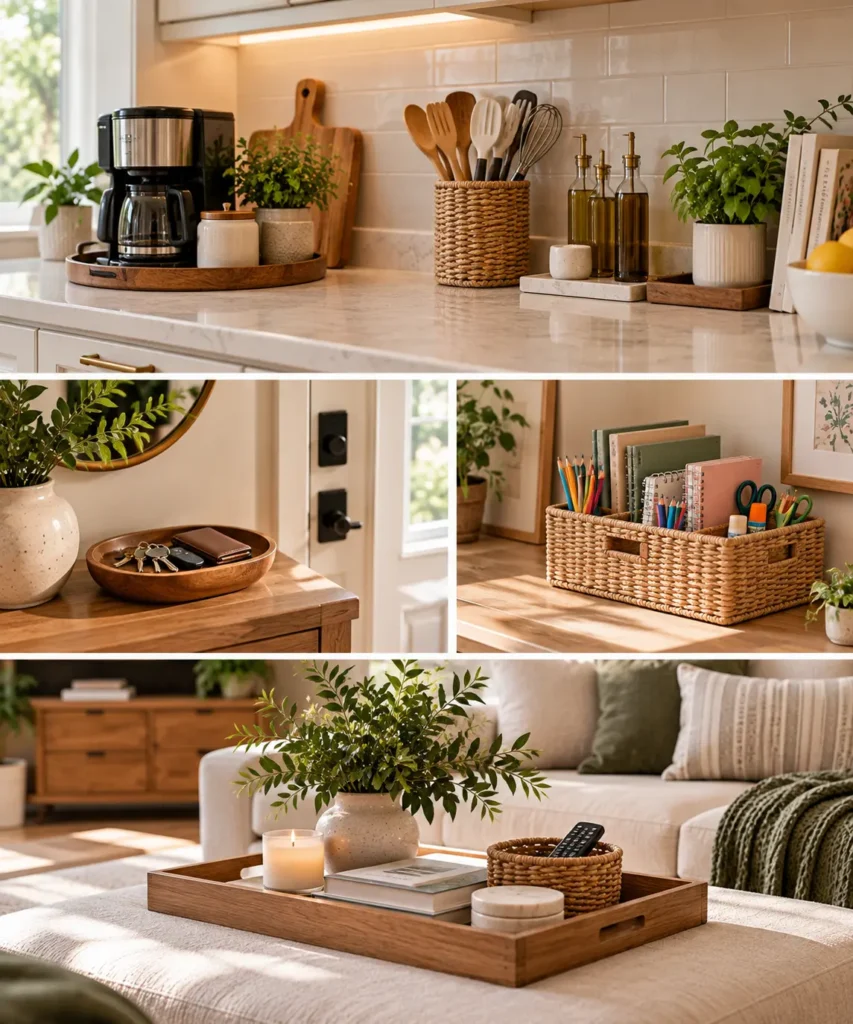
If you use something every day, it should be easy to reach.
Your coffee maker, cooking utensils, children’s school supplies, keys, or favorite books don’t have to disappear just because you’re trying to reduce visual clutter.
The trick is to give everyday items a designated, contained place.
For example, instead of having several kitchen essentials scattered across the counter, group the ones you use most often together on one tray.
2. Group similar objects together
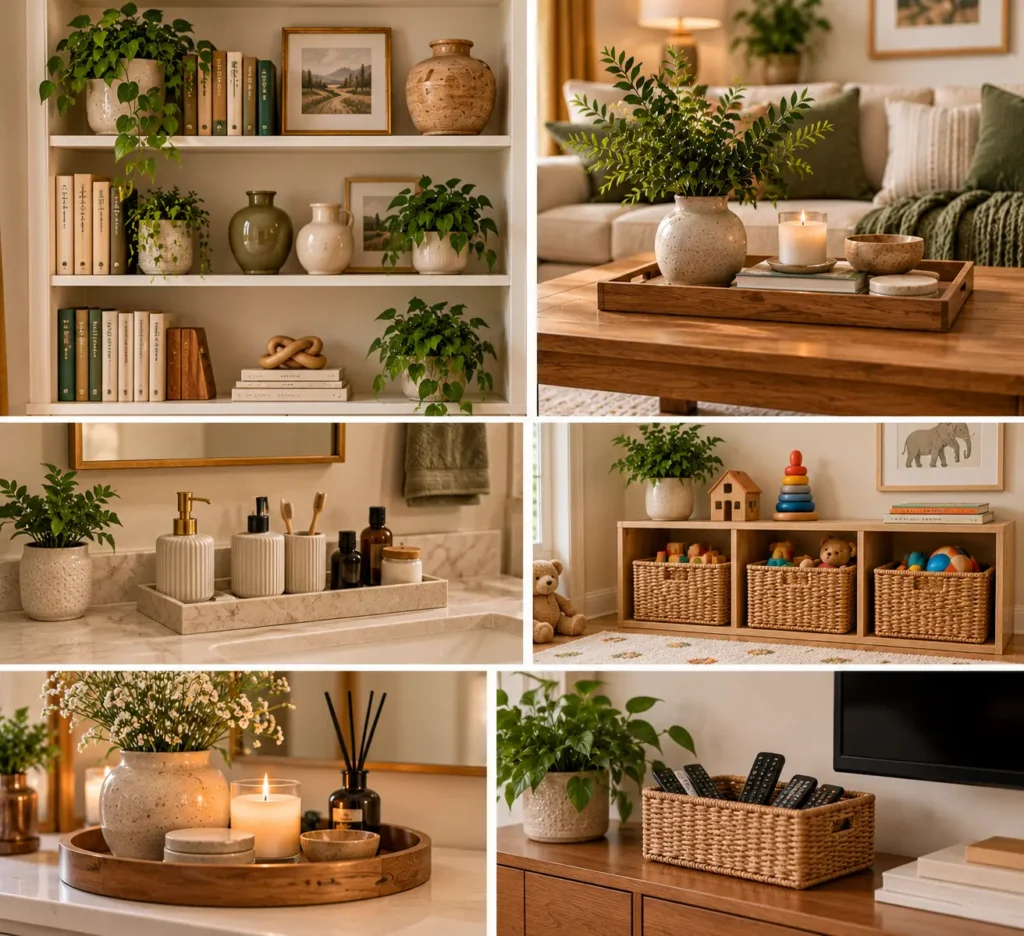
Scattered objects look more chaotic than grouped objects, even when you’re looking at the same number of things.
Put similar items together:
- Books with books
- Children’s toys in one defined area
- Candles together on a tray
- Toiletries inside one bathroom organizer
- Remote controls in one basket
- Decorative objects together on one shelf
Grouping creates visual order because your eyes can understand one collection instead of many unrelated objects.
3. Hide things that don’t need to be seen
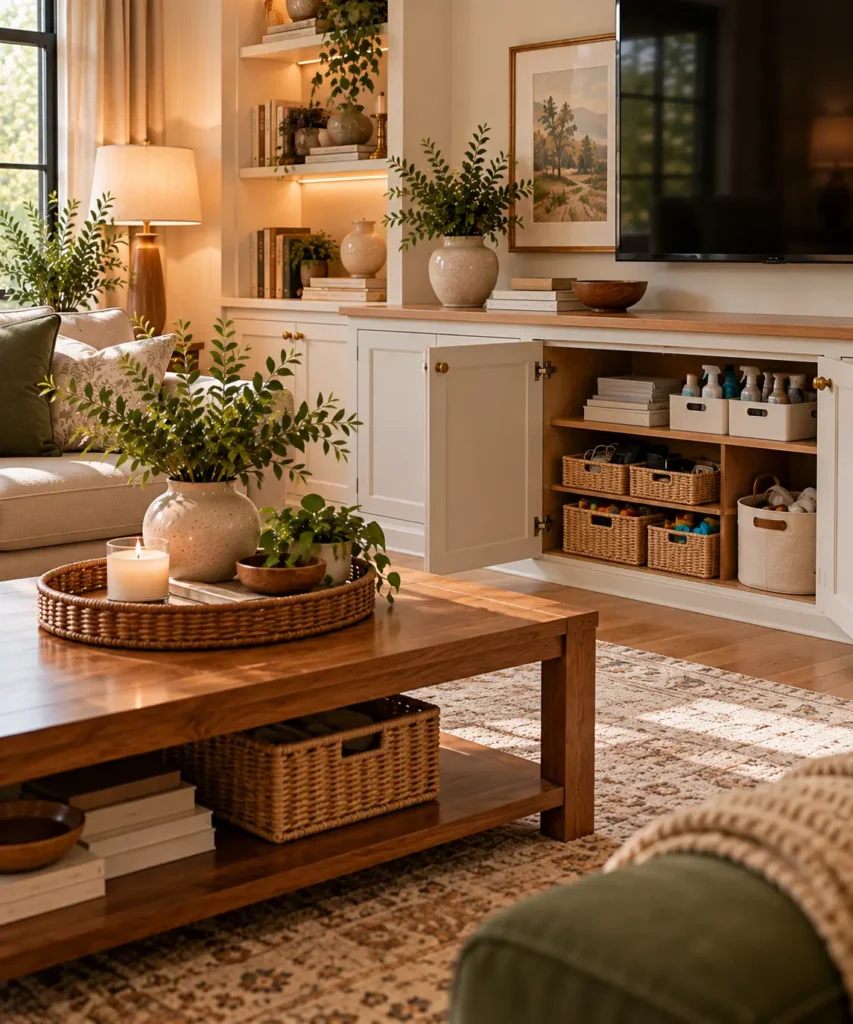
Ask yourself:
“Does seeing this make my home more functional, or does it simply remind me that I have stuff?”
If you don’t need to see something to use it, consider storing it behind a cabinet door, inside a drawer, in a basket, or in another designated storage area.
This is especially useful for things like:
- Cables and chargers
- Cleaning supplies
- Paperwork
- Excess toiletries
- Packaging
- Spare household supplies
- Toys that aren’t currently being used
Good storage allows you to keep things you need without making them part of the room’s visual landscape.
4. Give important pieces space around them
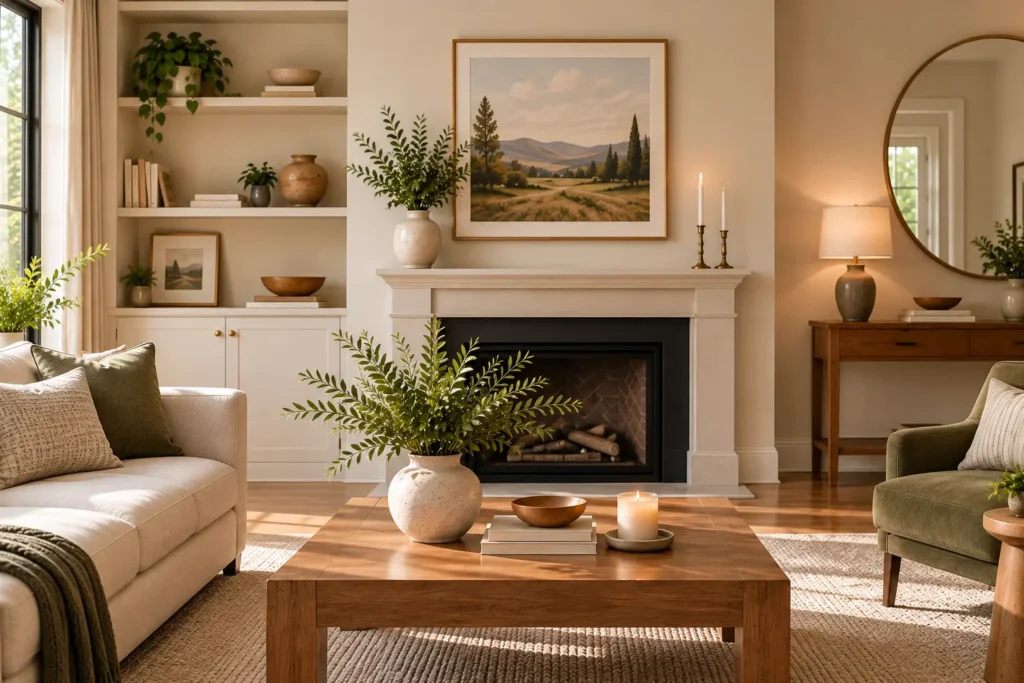
If everything is packed tightly together, even your favorite decor can get lost.
When something is meaningful or beautiful, give it some space.
Instead of filling an entire console with accessories, choose one statement piece and leave some of the surface empty around it.
Instead of filling every inch of a bookshelf, leave a few open sections.
Instead of hanging several pieces of artwork close together simply because you have the wall space, give your favorite piece enough room to stand on its own.
Empty space helps important things feel important.
The “Do I Need to See This?” Test
When you’re unsure whether something should stay visible
This prevents you from falling into the trap of either “everything must be hidden” or “everything can stay out.”
The goal is somewhere in between: a home where the things you need are easy to find, the things you love are easy to appreciate, and everything else doesn’t have to compete for your attention.
How to Organize When You Can’t Tolerate Clutter
If clutter makes you feel overwhelmed almost immediately, your first instinct may be to buy more storage.
Storage isn’t always the problem. Visibility is.
You may already have drawers, baskets, cabinets and closets. If you still see dozens of individual objects competing for your attention, the problem may be how much is visible, not how little storage you have.
That’s because organizing isn’t only about where things are stored. It’s also about how much your eyes have to process at once.
Start by reducing what is visible
Instead of asking, “Where can I put all of this?”, ask:
“How much of this needs to be visible?”
For example, your kitchen might have 15 items sitting on the counter. You may use all 15—but that doesn’t mean you need to look at all 15 every time you enter the kitchen.
Keep the few things you use constantly within reach and put the rest behind cabinet doors, inside drawers, or in nearby storage.
You’re not necessarily owning less.
You’re seeing less.
Create visual zones
Give each area a clear purpose.
Instead of having books, candles, remotes, toys, paperwork, and chargers scattered across the same coffee table, create separate homes for them.
For example:
When similar things stay together, the room becomes easier to visually understand.
Use containers to create visual boundaries
A collection of ten loose objects can look chaotic.
Put those same objects into one attractive basket or container, and suddenly your eyes register one visual unit instead of ten separate things.
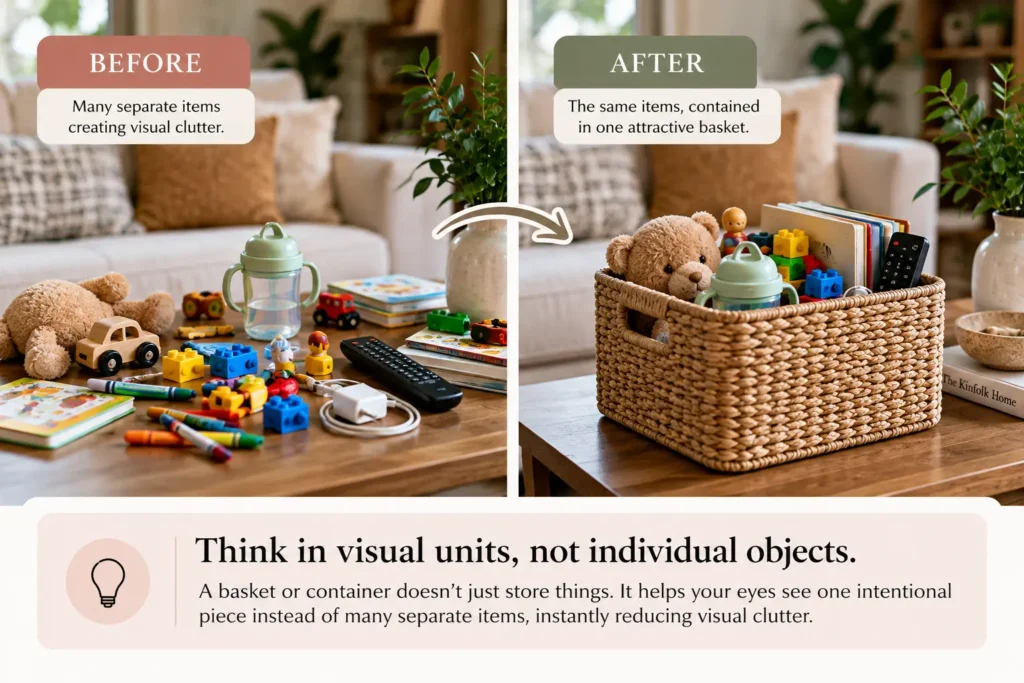
This is especially useful for:
- Toys
- Blankets
- Magazines
- Craft supplies
- Bathroom products
- Cables
- Small children’s belongings
The container isn’t just providing storage.
It’s reducing the number of individual visual signals in the room.
Don’t organize things you don’t need
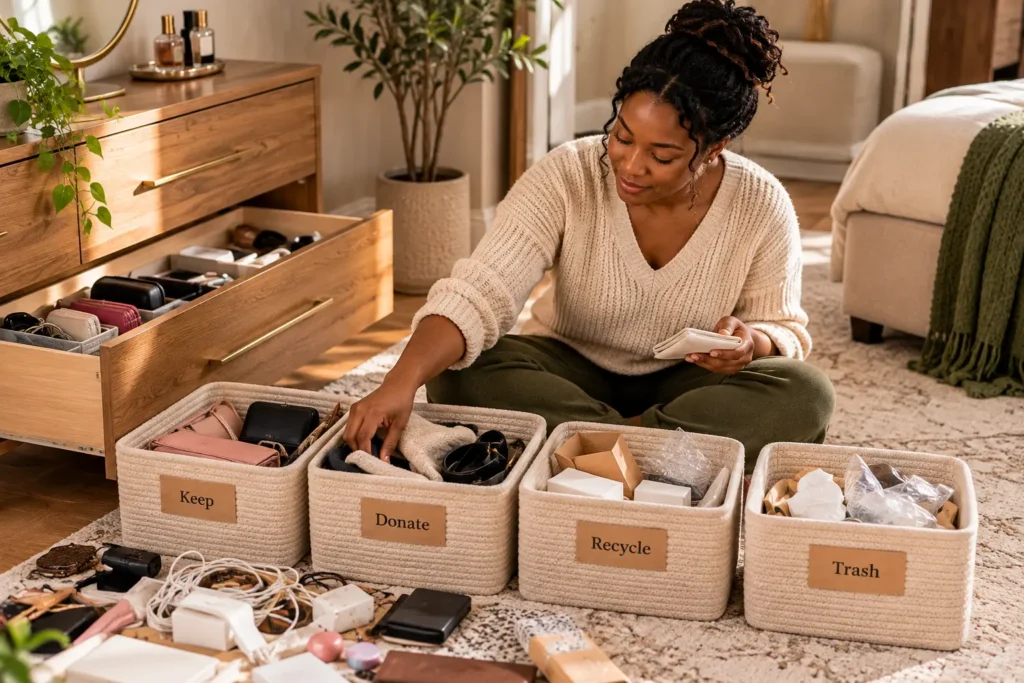
This is where many organizing projects go wrong.
You can spend hours finding beautiful containers for things you don’t actually need, use, or enjoy.
If a drawer is full of miscellaneous items that you rarely touch, organizing them more neatly won’t necessarily make your home feel calmer.
Before organizing a category, remove what is:
- Broken
- Duplicated
- Unused
- No longer relevant
- Being kept without a clear reason
Then organize what’s left.
Give yourself “clear zones”
If you are easily overwhelmed by visual clutter, having a few completely clear areas can make a significant difference.
Choose surfaces where you intentionally allow very little to accumulate.
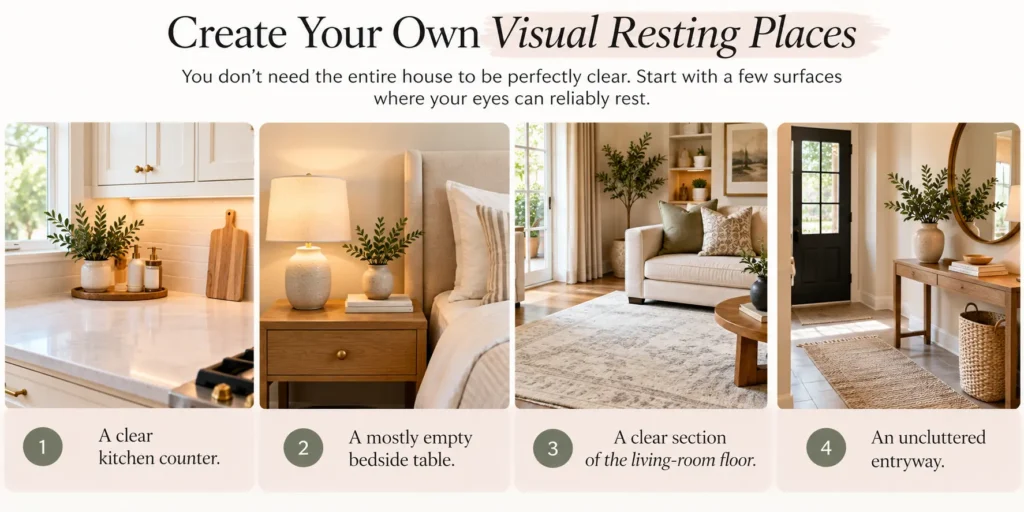
For example:
A clear kitchen counter.
A mostly empty bedside table.
A clear section of the living-room floor.
An uncluttered entryway.
You don’t need the entire house to be perfectly clear.
Having a few reliable visual resting places can make the whole home feel calmer.
Organize for your eyes, not just your belongings
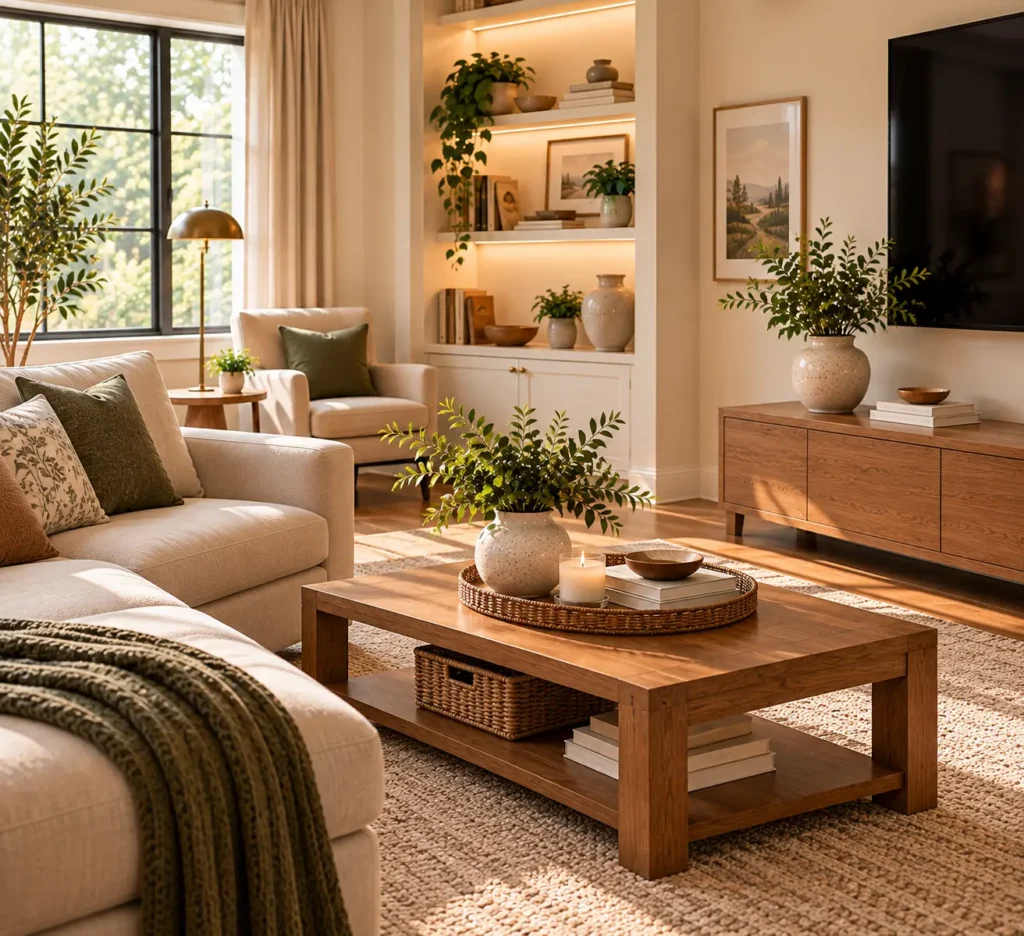
A well-organized home isn’t necessarily one where everything has been placed into a storage system.
It’s one where you can walk into a room and quickly understand what you’re seeing.
So when you’re organizing, don’t only ask:
“Where does this belong?”
Also ask:
“Do I need to see this?”
That small change can completely transform the way you approach clutter.
The goal isn’t to create a home with nothing in it.
It’s to create a home where your belongings don’t constantly compete for your attention.
Low-Visibility Storage Checklist
Use this checklist when you want your home to feel less visually busy without getting rid of everything you own.
What can you hide to instantly reduce visual noise?
Start with the things you see every day but don’t necessarily need to see.
Look for things you can hide
Choose lower-visibility storage
Before putting something on display, ask:
Your final test
Stand at the entrance of the room and look around for five seconds.
What catches your eye first?
If the answer is random belongings, piles, cables, toys, or everyday necessities, consider hiding or grouping them.
If the answer is a beautiful piece of artwork, a favorite lamp, a plant, or another intentional feature, you’ve created the kind of visual hierarchy that makes a room feel calmer.
The goal isn’t to hide your entire life. It’s to hide the visual noise while keeping the things you need easy to access.